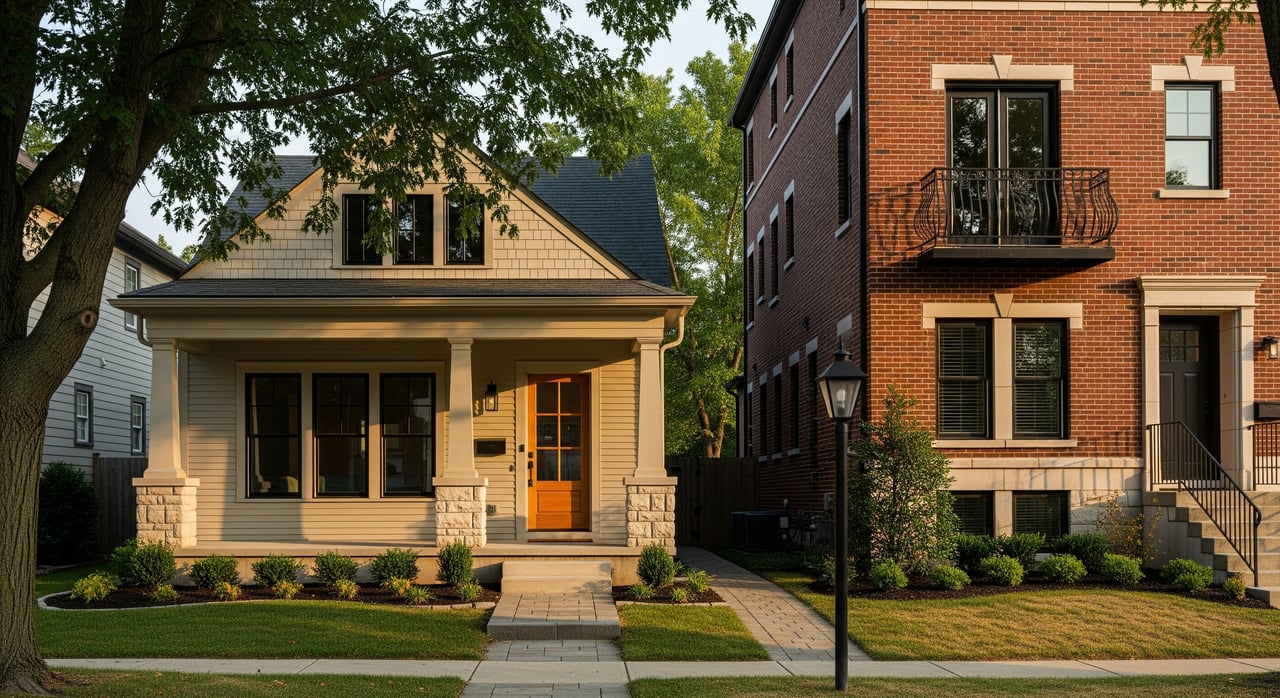
Not sure whether a townhome or a detached starter home will fit your Maineville life best? You are not alone. As a first-time buyer, you are balancing monthly costs, maintenance, privacy, and future resale. This guide walks you through the tradeoffs in plain English, gives you a simple budgeting method, and shares a quick decision framework so you can move forward with confidence. Let’s dive in.
Maineville market factors to weigh
Prices and inventory shape value
In a small market like Maineville, listing counts can shift quickly, and small sample sizes can make price medians swing. That means the value gap between a townhome and a detached starter home can tighten or widen from one season to the next. Watch active inventory and days on market to see which property type is getting more buyer attention at any given moment. A local MLS snapshot or a quick check-in with your agent helps you interpret what that means for your offers and negotiation power.
Taxes, HOA scope, and utilities
Property taxes, HOA dues, and utilities will affect your total monthly budget as much as the purchase price. Some townhome HOAs cover exterior maintenance, lawn care, snow removal, and a master insurance policy, which can simplify budgeting. Others cover less and keep dues lower, so you would handle more items yourself. Understanding the HOA’s budget, what it covers, and the health of its reserves is essential.
Commute and daily life
Many Maineville residents commute within the broader Cincinnati–Dayton corridor. If you want a low-upkeep lifestyle and quick lock-and-leave convenience, a townhome can be appealing. If you want a private yard for hobbies, pets, or future projects, a detached starter home may be worth the extra maintenance time and cost.
Monthly cost comparison: how to build your budget
A smart comparison looks at your full monthly picture, not just mortgage principal and interest. For each property you consider, capture these items:
- Mortgage principal and interest
- Property taxes
- Homeowner’s insurance (HO-3 for most detached homes; HO-6 for townhomes, paired with the HOA’s master policy)
- Private mortgage insurance if you put less than 20 percent down
- HOA dues for townhomes
- Utilities: electricity, gas, water/sewer, trash
- Routine maintenance and a reserve for bigger items
For mortgage basics and planning, you can review the Consumer Financial Protection Bureau’s clear overview in the Owning a Home resource. It explains loan types, closing costs, and how payments are built. See mortgage basics from the CFPB for a quick refresher: mortgage basics from the CFPB.
Hypothetical monthly comparison
Below is a simple example to show how totals can differ. It is for illustration only, not Maineville-specific pricing.
Scenario A — Townhome
- Purchase price: $260,000; 5% down; 30-year fixed at 6.0% → P&I ≈ $1,482/month
- HOA: $250/month
- Taxes and insurance: ≈ $300/month
- Maintenance reserve: ≈ $100/month
- Estimated total: ≈ $2,132/month
Scenario B — Detached starter home
- Purchase price: $300,000; 5% down; 30-year fixed at 6.0% → P&I ≈ $1,710/month
- HOA: $0
- Taxes and insurance: ≈ $350/month
- Maintenance reserve: ≈ $250/month (1% rule of thumb)
- Estimated total: ≈ $2,310/month
Takeaway: a townhome’s lower purchase price and included services can offset HOA dues, but results vary. Always compare specific HOA coverage to what you would pay out of pocket on a detached home.
What moves the numbers most
- Interest rates: Small changes in rate can meaningfully shift your payment. For weekly rate context, see the Freddie Mac Primary Mortgage Market Survey.
- Down payment and PMI: Lower down payments can add PMI, increasing your monthly cost.
- HOA coverage: A higher HOA that includes exterior work, snow removal, and master insurance can still be cost-effective.
- One-time costs: A roof, driveway, or a special assessment can swing first-year costs.
Privacy, space, and maintenance
Outdoor space and privacy
Detached starter homes typically offer a private yard, more distance from neighbors, and room to add or expand later. Townhomes often have smaller yards or patios and share at least one wall, which reduces outdoor privacy. If you value gardening, larger pets, or a separate workshop area, a detached home may be a better fit.
Time and maintenance
Townhomes typically reduce day-to-day exterior upkeep when the HOA handles lawn, snow, and exterior repairs. If you prefer to travel or keep weekends open, this can be a big plus. Detached homes require more time and budget for yard work and exterior maintenance, but they give you full control over how and when the work gets done.
Noise, pets, and rules
Shared walls can increase the chance of noise transfer in townhomes. Most HOAs have rules on pets, exterior changes, parking, and rentals, so read them closely before you commit. Detached homes usually give you more freedom to customize, subject to local codes and zoning.
Parking and storage
Townhomes may offer single garages or assigned parking, while detached homes more often include two-car garages and larger driveways. If you need storage for tools, sports gear, or hobbies, factor garage size and storage options into your search.
Resale outlook and financing
A detached home in a suburban area often has a broader buyer pool because of yard space and flexibility. Townhomes attract buyers who want low maintenance, downsizers, and young professionals. Appreciation in both cases depends on location, supply, and condition. HOA health also matters: well-run associations with solid reserves can boost confidence, while rising dues and deferred maintenance can be a concern. For best practices on reserves and governance, see HOA best practices and reserve studies.
Financing rules can vary for condos and some townhome communities, especially for certain loan types. For example, FHA or VA financing may require the community to meet specific criteria. You can explore general guidance here: FHA condo approval requirements. Your lender will review the HOA’s budget, insurance, and policies to confirm eligibility.
Insurance needs differ too. Detached homes usually require a full HO-3 policy covering the structure and contents. Townhome buyers often carry an HO-6 policy for the interior, finishes, and personal property, while the HOA’s master policy covers the building exterior. Ask your insurance agent to price both before you finalize an offer.
Quick decision framework
Score each item 1 to 5 by importance to you, then see which side wins.
- Low monthly cost and predictability
- Low maintenance and time commitment
- Private outdoor space
- Flexibility to renovate or expand
- Quiet and privacy
- Close to schools or commute needs
- Potential resale value in your timeline
Interpretation:
- If most of your points favor low maintenance and predictable costs, a townhome may be better.
- If your points favor privacy, yard space, and customization, a detached home may be better.
Due diligence checklists
Townhomes: documents to review
- Current HOA budget, reserve study, and last two years of financials
- HOA meeting minutes to spot litigation, assessments, or deferred maintenance
- HOA rules on pets, rentals, parking, and exterior modifications
- History of special assessments and current delinquency rate
- Who covers roof, siding, driveway, lawn, and snow removal
Detached homes: facts to gather
- Recent inspection reports and estimates for needed repairs
- Age and service history of roof, HVAC, and major systems
- Utility cost history and yard maintenance estimates
- Property boundaries and any easements
General financial prep
- Get a preapproval and compare loan options with two lenders
- Pull property tax history from county records
- Get homeowner’s insurance quotes and, if applicable, a flood insurance quote
- Ask the seller for recent utility bills to set expectations
For flood considerations and insurance requirements, use the FEMA Flood Map Service Center to evaluate a property’s flood zone.
Two quick buyer scenarios
- You want minimal upkeep and plan to move in 3 to 5 years. A well-priced townhome with a strong, well-funded HOA can keep monthly stress low and be easy to resell to similar buyers.
- You want a yard, value flexibility for future projects, and expect to stay longer. A detached starter home may suit you even if maintenance costs are higher, and your resale pool could be broader.
Next steps in Maineville
- Compare current local inventory by property type and days on market with your agent.
- Confirm property tax estimates through county records for any home you like.
- Request HOA documents as early as possible when considering a townhome.
- Get quotes from at least two lenders to see how rates, PMI, and closing costs impact your monthly budget.
- Walk each option through the decision framework above to clarify your priorities.
If you want a clear, numbers-first comparison for your short list, along with practical renovation and maintenance insight, reach out to Michelle McBride. Michelle pairs hands-on rehab experience with staging expertise to help you choose the right Maineville starter home or townhome with confidence.
FAQs
What costs differ most between Maineville townhomes and detached starter homes?
- The biggest variables are HOA dues and what they cover, your maintenance reserve, insurance type (HO-6 vs. HO-3), property taxes, and your interest rate and PMI. For rate trends, check the Freddie Mac Primary Mortgage Market Survey.
How do HOA fees and reserves affect a Maineville townhome purchase?
- HOA fees that include exterior maintenance and a well-funded reserve can stabilize monthly costs, while underfunded reserves can lead to special assessments. Review budgets and reserve studies; see HOA best practices and reserve studies.
Do lenders have different rules for townhomes and condos in Ohio?
- Yes. Some loan programs require the community to meet financial and insurance standards, and certain condos must be approved. Learn more about FHA condo approval requirements and ask your lender how they evaluate the HOA.
Which is likely to resell faster in Warren County: a townhome or a detached home?
- It depends on current inventory and buyer demand. Detached homes often draw a wider pool, while townhomes appeal to buyers who prioritize low maintenance. Ask your agent for recent days-on-market data by property type before you list or buy.
Do I need flood insurance for a home in Maineville?
- Not all properties require it. Check the home’s flood zone using the FEMA Flood Map Service Center, and then get a quote from your insurance agent so you can budget accurately.