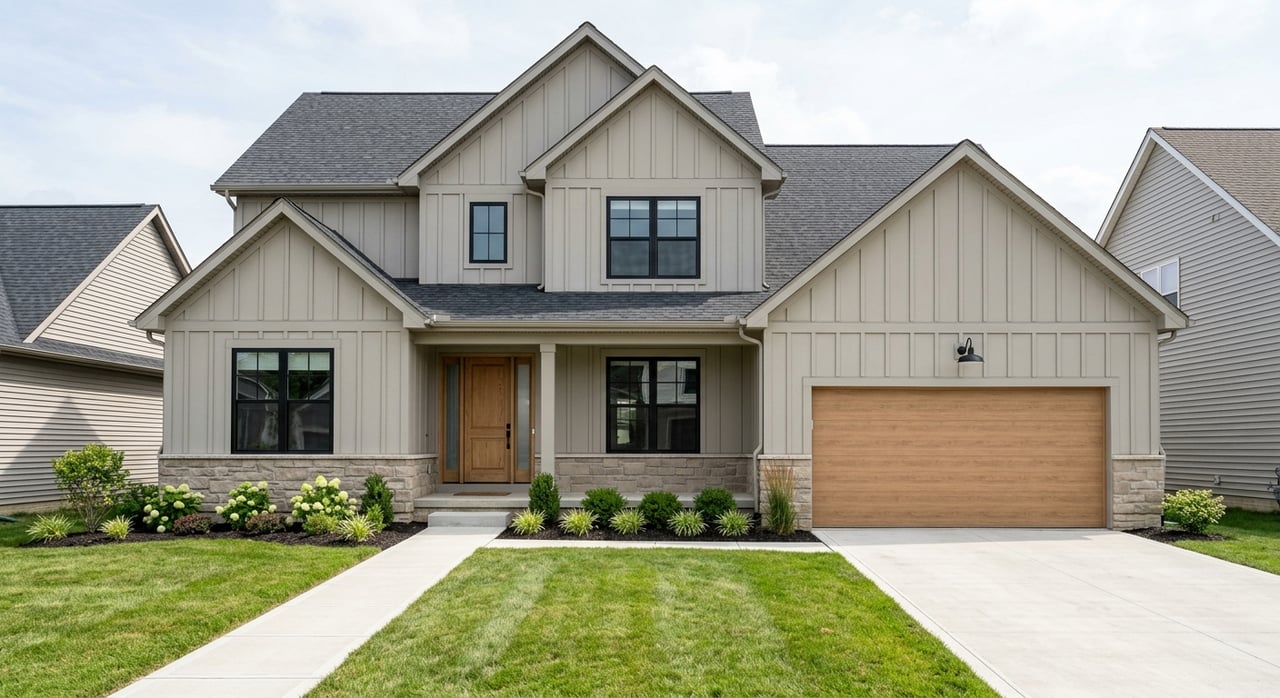
Trying to choose between a brand-new home and an older one in Maineville? You are not alone. In a small market like Maineville, where prices can range from the low $300,000s to much higher depending on size, condition, and lot, the right choice often comes down to how you want to live, how fast you need to move, and how much project work you are comfortable taking on. This guide will help you compare new construction and resale homes in Maineville so you can make a more confident decision. Let’s dive in.
Maineville housing options at a glance
Maineville is a small village market, with 1,405 residents and 697 housing units according to the Census Bureau profile. Even in a smaller market, buyers can still find a meaningful mix of options, especially when comparing newer planned communities with older resale homes.
Recent pricing snapshots show why the choice is not always simple. Redfin reported a March 2026 median sale price of $317,000, Zillow’s average home value was $381,609, and Realtor.com reported a January 2026 median sale price of about $398,000. The exact number varies by source, but the overall pattern is clear: many buyers in Maineville are comparing homes in the low-to-mid $300,000s, with some properties well above that range.
New construction in Maineville
New construction in Maineville covers more than one price point. Some communities offer entry-level and mid-range options, while others move into much larger and higher-priced homes.
At the more approachable end, Arbors at Grandin Pond lists single-family homes from the $320s. The community includes ranch and two-story plans, along with features like cul-de-sac homesites, pond views, seeded side and rear yards, and sodded front yards.
Bell Harbor offers another current option with over 100 homesites and both one- and two-story plans. The Remington ranch starts at $364,995 and ranges from 1,514 to 1,634 square feet, while the Thoreau starts at $436,995 and ranges from 3,067 to 3,127 square feet. Bell Harbor also shows quick-move-in homes with estimated move-in dates, which can help if you want a newer home without waiting through a full build cycle.
At the upper end, Cypress Pointe starts from $845,000 and includes much larger homes. The Ellsworth plan ranges from 4,585 to 5,915 square feet, showing that Maineville new construction can also reach luxury pricing and very large layouts.
Common new-build features
Across current communities, several features show up again and again. These include open-concept kitchens, flex rooms, lofts, walk-in closets, attached two- to three-car garages, and basement or partial-basement foundations.
Lot sizes in recent examples are often in a more standard suburban range. Recent homes in comparable local new-build patterns have lot sizes of about 0.17 to 0.29 acres, or roughly 7,000 to 10,000 square feet. If you want a predictable layout and newer finishes, that consistency can be a plus.
Resale homes in Maineville
Resale homes in Maineville tend to offer more variety. That variety can show up in age, style, lot shape, yard size, and overall character.
Recent examples include a 1974 quad-level home on 1.1 acres, a 2003 home on 0.31 acres, and a 2005 custom ranch on 0.33 acres. Compared with many new builds, resale homes may give you access to larger lots, more established settings, or home styles that do not all look alike.
Price range is broad on the resale side too. Current 45039 examples have included homes listed at $319,900, $390,000, $425,000, $531,500, and $879,900. That spread reflects how much condition, lot quality, location within the village area, and square footage can affect value.
What resale buyers should watch closely
With resale homes, condition matters more from one property to the next. Some homes may be move-in ready, while others may need cosmetic updates or more immediate repairs.
The Consumer Financial Protection Bureau advises buyers to get an independent inspection early. It also notes that buyers may be able to negotiate repairs or credits for damaged or worn components. Once you own the home, ongoing maintenance and repairs become your responsibility, so it helps to go in with a realistic plan.
This is where practical renovation insight can make a real difference. If you are comparing a resale home that needs updates against a new build with a higher price tag, it is important to look beyond the list price and think about what those updates may actually cost after closing.
New construction vs. resale: key differences
Both paths can work well in Maineville, but they usually appeal to different priorities.
Choose new construction for newer systems
If your top goal is minimizing immediate repair work, new construction often has the edge. M/I Homes says its homes are independently tested for energy efficiency and include a one-year customer care program plus a 10-year construction-defects warranty.
That does not mean a new home is maintenance-free. It does mean you are less likely to walk into older roofing, HVAC, windows, or other aging systems right after closing.
Choose resale for more lot and style variety
If you care most about larger lots, mature surroundings, or a wider mix of architecture, resale usually offers more flexibility. Maineville resale examples show lot sizes and home types that are harder to match in many newer subdivisions.
You may also find value if you are open to updating finishes over time. For buyers who do not mind painting, flooring changes, or future remodeling, resale can create more room to personalize the home.
Choose based on your timeline
Timing is one of the biggest practical differences. Resale homes usually close faster, while new construction often takes longer because the process includes design selections, construction milestones, and permit-related timing.
The homebuying and loan closing process for a resale purchase may take several weeks. By contrast, a new-construction timeline depends on factors like permits, plan review, and utility-related approvals in Warren County, which can make completion dates less predictable. If you need to move by a firm deadline, that timing difference matters.
Budgeting for the full cost
No matter which route you choose, your budget should cover more than the mortgage payment alone. The Consumer Financial Protection Bureau advises buyers to account for principal, interest, taxes, insurance, possible HOA dues, maintenance, repairs, and utilities.
In Maineville, those costs can show up differently depending on the home type. With new construction, more of your budget may go toward builder upgrades, design selections, and timing-related decisions. With resale, more of your budget may go toward inspections, negotiated repairs, and post-closing improvements.
A good way to compare options is to ask yourself what kind of spending feels easier to manage. Would you rather pay more upfront for a newer finish package and fewer early projects, or buy an older home and improve it over time?
How to decide in Maineville
If you want a simple rule of thumb, here it is: new construction often fits buyers who want newer systems, a more predictable finish package, and less immediate project work. Resale often fits buyers who want larger lots, more architectural variety, or a better chance to create value through updates.
That said, the best choice depends on your daily life. Your work commute, preferred move-in timeline, comfort with repairs, and long-term plans should all shape the decision.
For some buyers, a quick-move-in new build is the best of both worlds. For others, a well-located resale home with good bones and a little room for improvement can be the smarter buy.
A practical way to compare homes
When you tour homes in Maineville, try comparing each option using the same checklist:
- Purchase price
- Estimated monthly payment
- Lot size and outdoor space
- Age of major systems
- Needed updates or repairs
- Move-in timeline
- Floor plan fit for your daily routine
- Long-term resale potential
This approach can help you stay focused on the total picture instead of getting pulled too far by surface finishes alone.
If you are weighing homes that need work, it also helps to have a realistic eye on repair scope and presentation potential. That is especially true in a market where list prices can overlap between older homes and entry-level new construction.
If you want help sorting through Maineville options, comparing repair tradeoffs, or deciding whether new construction or resale makes more sense for your goals, connect with Michelle McBride. You will get practical guidance shaped by local market knowledge, renovation insight, and a clear plan for your next move.
FAQs
Is new construction more expensive than resale homes in Maineville?
- Often, but not always. Maineville new construction starts from the $320s in some communities, while resale homes in the 45039 area have recently ranged from $319,900 to $879,900 depending on size, condition, and lot.
Do resale homes in Maineville usually have larger lots?
- In many cases, yes. Recent resale examples include homes on 0.31 acres, 0.33 acres, and even 1.1 acres, while newer homes often sit on more standard suburban lots around 0.17 to 0.29 acres.
Can you move into a new construction home quickly in Maineville?
- Sometimes. Some communities, like Bell Harbor, show quick-move-in homes with estimated move-in dates, but a full build typically takes longer than a resale purchase because of construction and permit timing.
What is the biggest benefit of buying a resale home in Maineville?
- The biggest benefit is usually variety. Resale homes can offer different architectural styles, more established lots, and more opportunities to find value if you are comfortable with updates.
What is the biggest benefit of buying new construction in Maineville?
- The biggest benefit is usually condition. New construction often gives you newer systems, more predictable finishes, and fewer immediate repair surprises after closing.
Should Maineville buyers get an inspection on a resale home?
- Yes. The Consumer Financial Protection Bureau advises buyers to get an independent inspection early so they can better understand the home’s condition and potentially negotiate repairs or credits.